The Vatican dress code requires that your shoulders and knees are covered. This applies to the Vatican Museums, the Sistine Chapel, St. Peter’s Basilica, and the Vatican Gardens. Staff check at the entrance, and visitors who don’t meet the standard are turned away — there are no exceptions and no appeals. According to the official Vatican Museums visitor guidelines published by the Musei Vaticani, sleeveless tops, low-cut garments, shorts above the knee, miniskirts, and hats are all prohibited.
This rule catches thousands of visitors every year, particularly in summer when Rome regularly exceeds 30°C and the instinct is to dress for the heat. If you are visiting the Vatican Museums and Sistine Chapel, plan your outfit before you leave your hotel — not after you have waited 45 minutes in the security queue.
What Exactly Gets You Turned Away?
The enforcement is straightforward. Staff at the entrance are looking for these specific violations:
- Sleeveless tops, tank tops, spaghetti straps, and off-shoulder tops — anything that leaves shoulders bare
- Shorts, skirts, or dresses that end above the knee
- Low-cut necklines and crop tops that expose the chest or stomach
- Transparent or see-through clothing
- Hats worn indoors (men must remove hats; women are generally permitted to keep them on inside St. Peter’s Basilica but not the museums)
- Clothing, jewelry, or visible tattoos featuring imagery that staff consider offensive to Catholic morality
The rule about tattoos is selectively enforced. Standard tattoos are not a problem. The restriction targets imagery that is explicitly anti-religious or offensive.
Ripped jeans are a gray area. According to visitor reports compiled by Rome travel sites, small tears above the knee generally pass. Large holes at the thigh or knee — the kind that expose significant skin — may result in rejection.
What Should You Actually Wear?
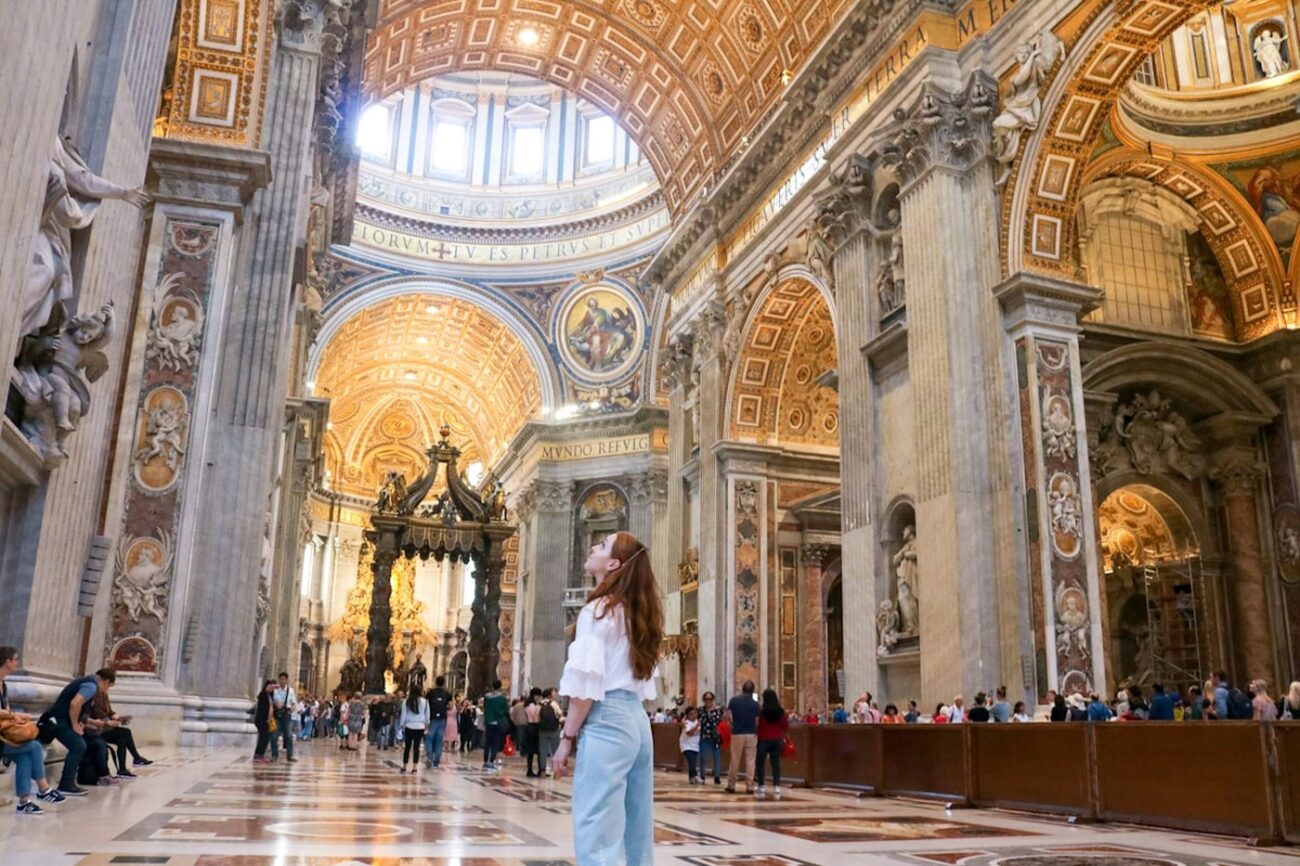
The simplest approach: dress as if you are visiting a church, because that is what you are doing. St. Peter’s Basilica is an active place of worship, and the Vatican Museums lead directly into the Sistine Chapel, which is a consecrated space.
For summer visits between June and September, when daytime temperatures in Rome commonly reach 30 to 35°C, light cotton trousers or linen pants work well for both men and women. Women can wear a knee-length dress or midi skirt. A lightweight cardigan or scarf that covers the shoulders takes up almost no space in a bag and solves the most common rejection issue — bare shoulders from summer tops.
For men, long trousers and a short-sleeved shirt with sleeves that cover the shoulders is the standard. T-shirts are acceptable as long as they have sleeves and do not display offensive imagery. Jeans are fine.
For cooler months between October and March, the dress code is generally not an issue since most visitors are already layered up.
Footwear has no formal rule, but the Vatican Museums encompass roughly 7 kilometers of corridors, and a typical visit involves 3 to 5 hours on your feet. Comfortable walking shoes are practical.
What If You Arrive and You’re Not Dressed Right?
Don’t leave. Vendors near the Vatican entrance sell lightweight ponchos, scarves, and wraps specifically for this purpose. They typically cost between €5 and €15 and are available from street vendors along Via di Porta Angelica and Via della Conciliazione, the main approaches to St. Peter’s Square.
A scarf or pashmina is the most versatile option. It covers bare shoulders when entering the Vatican, folds into a small bag when you leave, and doubles as sun protection. Many experienced Rome visitors carry one throughout the trip regardless of their plans for the day.
Does the Dress Code Apply Everywhere in Vatican City?
The dress code is strictly enforced at three locations: the Vatican Museums (which include the Sistine Chapel), St. Peter’s Basilica, and the Vatican Gardens.
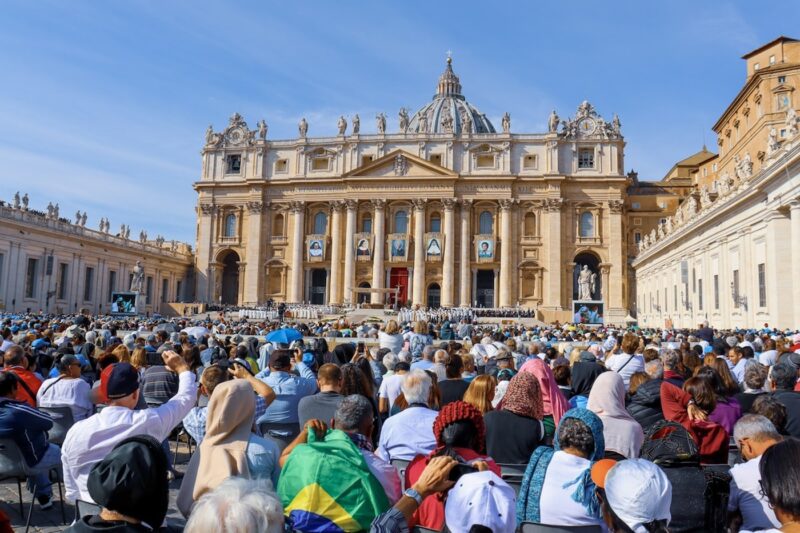
St. Peter’s Square, the large open piazza in front of the basilica, does not enforce a dress code. You can walk through the square in any attire. However, if you plan to enter the basilica from the square — which is free and does not require a ticket — you will be checked at the basilica entrance.
The enforcement level can vary slightly between locations. According to visitor reports, the Vatican Museums entrance tends to be the strictest, while St. Peter’s Basilica enforcement can be marginally more flexible on borderline cases. Do not count on this.
What About the Sistine Chapel Specifically?
The Sistine Chapel is inside the Vatican Museums, so you pass through the museum dress check before you reach it. There is no separate dress code check at the Sistine Chapel entrance. However, the chapel has additional rules beyond clothing:
Photography is prohibited inside the Sistine Chapel. This is strictly enforced — guards will tell you to put your phone away.
Silence is required. The chapel is a consecrated space used for papal conclaves, and guards regularly ask visitors to lower their voices.
Mobile phones must be on silent mode.
Frequently Asked Questions
Can you wear shorts to the Vatican?
Only if they reach the knee or below. Shorts that end above the knee will result in denial of entry at the Vatican Museums and St. Peter’s Basilica. If you want to guarantee entry, wear trousers or knee-length shorts.
Do children have to follow the Vatican dress code?
There is no separate dress code for children, but the same rules technically apply. In practice, enforcement for young children is reportedly more relaxed than for adults. Children’s shoulders should still be covered, and shorts should ideally reach the knee.
Can you wear a hat inside the Vatican?
Men are expected to remove hats when entering St. Peter’s Basilica — this is a longstanding Catholic tradition. In the Vatican Museums, hats are listed as prohibited in the official dress code. Women are traditionally permitted to keep head coverings on inside Catholic churches.
Is there a cloakroom for bags and prohibited items?
Yes. The Vatican Museums have a free cloakroom where you can store luggage, suitcases, large backpacks, and umbrellas. Bags larger than 40 x 35 x 15 centimeters must be stored. According to the Musei Vaticani, items left in the cloakroom must be collected the same day before closing — uncollected items are destroyed within 48 hours.
What about photography inside the Vatican Museums?
Photography is permitted throughout the Vatican Museums galleries, including the Raphael Rooms and Gallery of Maps, using phones and cameras without flash. The Sistine Chapel is the single exception — photography is prohibited inside the chapel itself and enforced by guards.