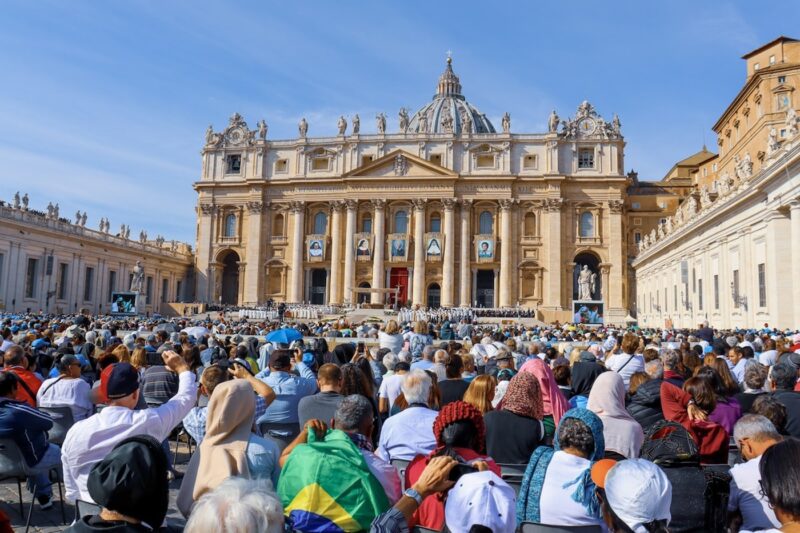
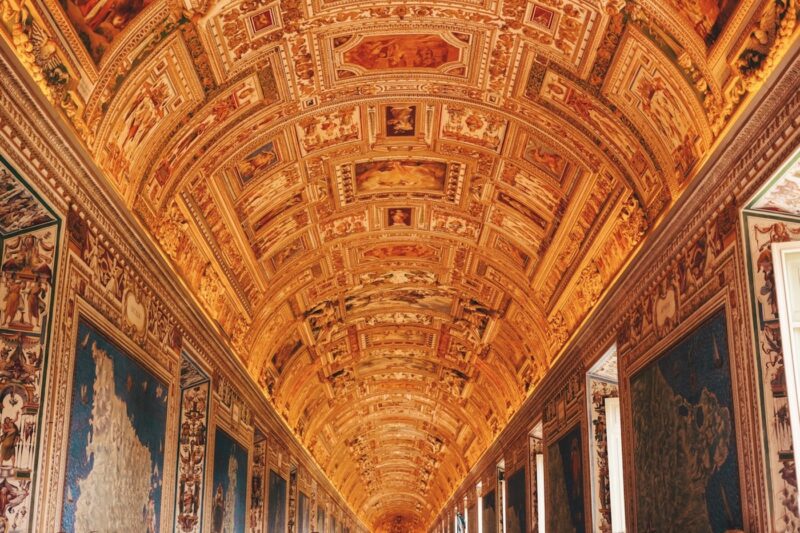
The best time to visit the Vatican Museums is either late January through February or October — months when attendance drops significantly compared to the 6 to 7 million visitors the site draws annually at peak. Within any given day, the first entry slot at 8am and the final two hours before the 8pm close offer the lightest crowds regardless of season.
The Vatican Museums are never empty. Not in January. Not at 8am. Not on a Tuesday. Vatican Museums director Barbara Jatta extended opening hours to 8am–8pm starting in January 2024 specifically to spread out what she described as a site congested with the public. That adjustment helped. It did not solve the problem.
When Is the Vatican Most Crowded?
The Vatican Museums draw peak crowds from April through October, with July and August representing the absolute maximum. During summer weekends, queue times at the ticket counter without advance booking can reach three hours. Even visitors with skip-the-line access encounter long security lines since all visitors pass through the same metal detectors.
Several specific dates reliably generate extreme crowding:
- Holy Week and Easter — one of the busiest periods of the year, combining standard spring tourism with the global Catholic pilgrimage calendar.
- Christmas week (December 24–26) — comparable to Easter in crowd density.
- The last Sunday of every month — free admission day, 9am–2pm with last entry at 12:30pm. This is consistently the most crowded single day of the month.
- July and August weekends — peak summer combined with weekend concentration.
Is January or February the Best Time to Visit?
Mid-January through late February offers the lowest crowd density of the year. The Museums maintain their standard 8am–8pm hours. Ticket availability is immediate rather than weeks-out. According to Romewise — a Rome travel resource maintained since 2009 — the difference in crowd levels between a late-January weekday and a mid-April morning is visible even inside the Sistine Chapel itself.
The practical tradeoffs are real. Rome in January averages around 10°C (50°F). St. Peter’s Square is exposed and wind-swept. If your visit is primarily the Museums and Sistine Chapel — indoor experiences both — winter is arguably the strongest season for pure visit quality.
One caveat: January 1 and January 6 (Epiphany) bring closure and elevated crowds respectively. Plan for the second half of January if low crowds are the priority.
The Shoulder Season Case: October
October is generally considered the optimal single month for balancing crowd levels, weather, and experience quality. The summer peak has ended. European school holidays are largely over. Rome temperatures average around 18°C (64°F) in October — comfortable compared to the 32–35°C heat of July and August.
Ticket availability in October is typically better than spring but tighter than January or February. Booking two to three weeks in advance is generally sufficient.
Spring: Good Weather, Increasing Competition
Late March through early June offers pleasant weather — 15–25°C (59–77°F) — and the Vatican Gardens in full condition. The tradeoff is sharply increased demand. April and May require booking standard entry tickets at least two to four weeks ahead. Guided tours and early access slots often sell out four to six weeks in advance.
Easter week should be treated as a separate category. Holy Week brings maximum crowds with four-hour wait estimates at the ticket counter for walk-up visitors. If your travel dates include Easter, booking through Viator or directly on the Vatican Museums official site (tickets.museivaticani.va) well in advance is not optional.
What Do Vatican Tickets Actually Cost?
As of 2026, standard adult admission to the Vatican Museums and Sistine Chapel is €20 at the door or €25 online (€20 admission plus a €5 booking fee), according to the official Vatican Museums ticketing portal (museivaticani.va). The booking window opens 60 days in advance. For summer peak dates, slots typically sell out 3–4 weeks ahead; specialized guided tours and early-access options often sell out 6–8 weeks out.
Reduced tickets are available for those aged 6–18 and students under 26 with valid ID, starting from €8. Children under 6 enter free.
The free last-Sunday admission is not a practical option for most visitors. It draws the largest single-day surge of the month — all concentrated into five hours — making it the most difficult day of the month to actually see the Museums well.
What Time of Day to Arrive
First entry at 8am consistently offers the lightest crowds within any season. The standard route runs from the Pinecone Courtyard through the Egyptian collection, Pio-Clementino Museum, Raphael Rooms, Gallery of Maps, and finally the Sistine Chapel. The full route covers roughly 7 kilometers across 54 galleries; most visitors need 3–5 hours to cover the highlights. Arriving at 8am puts you in the Sistine Chapel before the bulk of midday tour groups arrive.
The 10am–2pm window is the most crowded period regardless of season.
One current caveat: since January 2026, maintenance work has been underway on the altar wall of the Sistine Chapel — specifically the restoration of Michelangelo’s Last Judgment, first painted between 1536 and 1541. The chapel remains open and the ceiling fresco — painted between 1508 and 1512 — is fully visible. The altar wall has scaffolding present during this work period.
What Day of the Week Works Best
Tuesday, Wednesday, and Thursday are generally lighter than Monday, Friday, and Saturday. Monday tends to be busier because most other museums in Rome close on Mondays, driving more visitors to the Vatican. Saturday is the busiest single day of the week.
Sunday is closed except for the last Sunday of the month, which is the most crowded day in any given month.
Frequently Asked Questions
What is the least crowded month to visit the Vatican Museums?
Mid-January through February offers the lowest visitor volume of the year. Ticket availability is immediate rather than weeks in advance. The tradeoff is cooler weather and dormant outdoor spaces like the Vatican Gardens.
How far in advance should I book Vatican Museums tickets?
The official booking window opens 60 days ahead. For summer (June–August) and major holidays, booking three to four weeks in advance is the minimum; six to eight weeks is safer. For shoulder season (April–May, September–October), two to four weeks is generally sufficient. For January–February, same-week booking is often possible.
Is the free last Sunday of the month worth it?
For most visitors, no. The free admission day runs 9am–2pm with last entry at 12:30pm. The reduced hours concentrate visitors into fewer slots, making it consistently the most crowded single day of the month.
What is happening with the Sistine Chapel in 2026?
Restoration work on Michelangelo’s Last Judgment on the altar wall began in January 2026. The chapel remains open and the ceiling fresco is unaffected. Scaffolding is present on the altar wall side during this period. The Vatican Museums have not published an end date for the work.