The Borghese Gallery is one of Rome’s most capacity-restricted museums, admitting exactly 360 visitors per 2-hour time slot. There are no exceptions, no standby queues, and no walk-up tickets at the door. If you arrive without a booking, you will not get in. This has been the gallery’s policy since it reopened after renovation in 1997.
The practical consequence: Borghese Gallery tickets sell out weeks or months in advance for peak season visits. This guide reflects current conditions as of 2026.
Why Does the Borghese Gallery Have a Capacity Limit?
Cardinal Scipione Borghese assembled the collection between 1609 and 1633, acquiring works through purchase, patronage, and occasionally questionable means — including reportedly confiscating paintings from artists who displeased him. Gian Lorenzo Bernini, who produced six major sculptures for Borghese between 1619 and 1625, described the Cardinal as his greatest patron.
The Villa Borghese, built between 1613 and 1615 and designed by Flaminio Ponzio, was never intended as a public museum. Its rooms are relatively small, and the density of masterworks — 20 rooms containing sculptures by Bernini and Canova alongside paintings by Caravaggio, Raphael, and Titian — creates an environment where crowd management directly affects the experience.
The 360-person limit per slot preserves sight lines to the sculptures, maintains temperature and humidity conditions that protect the works, and ensures visitors can actually stand in front of Bernini’s Apollo and Daphne without being pressed against other visitors.
How the Booking System Works
The official booking channel is the Borghese Gallery’s own reservation line at +39 06 32810 and the online portal at galleriaborghese.beniculturali.it. The system does not operate on a simple 60-day advance window like the Vatican Museums.
The most reliable approach is to check availability as soon as your travel dates are confirmed and book immediately. For July and August visits, checking 8 to 10 weeks in advance is appropriate — slots for popular summer Saturday and Sunday morning sessions reportedly sell out within hours of becoming available. For shoulder season visits in April, May, September, and October, 3 to 6 weeks ahead is generally sufficient. January through early March is the most accessible period, with slots available on shorter notice.
Ticket prices as of 2026, per the official Galleria Borghese tariff page: €15 standard admission plus a €2 booking fee. Reduced admission is available for EU citizens aged 18 to 25. EU citizens under 18 enter free. The booking fee applies regardless of age or residency.
According to booking research on major travel platforms, third-party operators including Viator and GetYourGuide hold pre-purchased blocks and may have availability when the official system shows sold out. Prices through third-party platforms are typically €25 to €45 per person including the booking service, compared to €17 total on the official system.
What Happens During the Two-Hour Session?
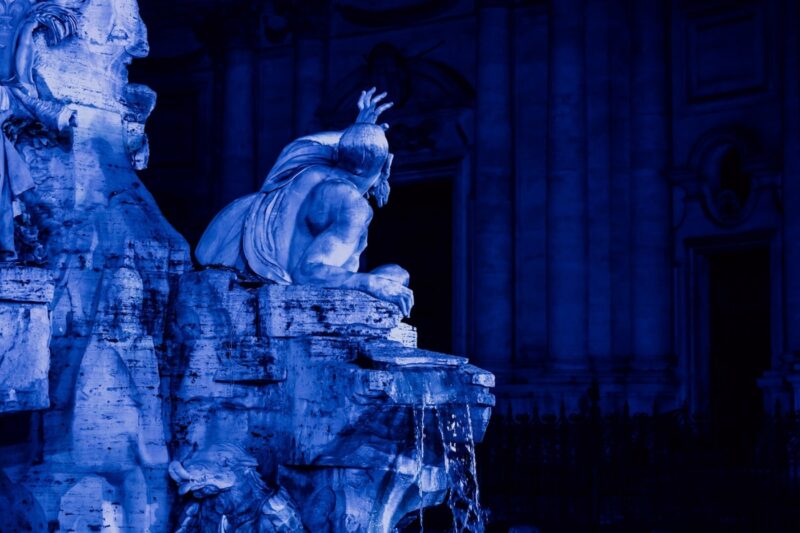
The 2-hour visit is genuinely sufficient for the Borghese collection. The ground floor contains the major Bernini sculptures — Apollo and Daphne, Pluto and Proserpina (1621–1622), Aeneas, Anchises and Ascanius (1618–1619), and the David (1623–1624) — alongside Canova’s reclining Pauline Bonaparte Borghese (1805–1808). The upper floor contains the pinacoteca: paintings including Caravaggio’s David with the Head of Goliath (c. 1610), Boy with a Basket of Fruit (c. 1593), and six other Caravaggio works; Raphael’s Deposition (1507); and Titian’s Sacred and Profane Love (c. 1514).
The enforced exit at the end of the slot is firm. Visitors are given a reminder at 1 hour 45 minutes and must clear the galleries by the scheduled end time. Unlike most Roman museums where closing time is approximate, Borghese operates precisely — the incoming group is waiting.
What Cannot Be Seen
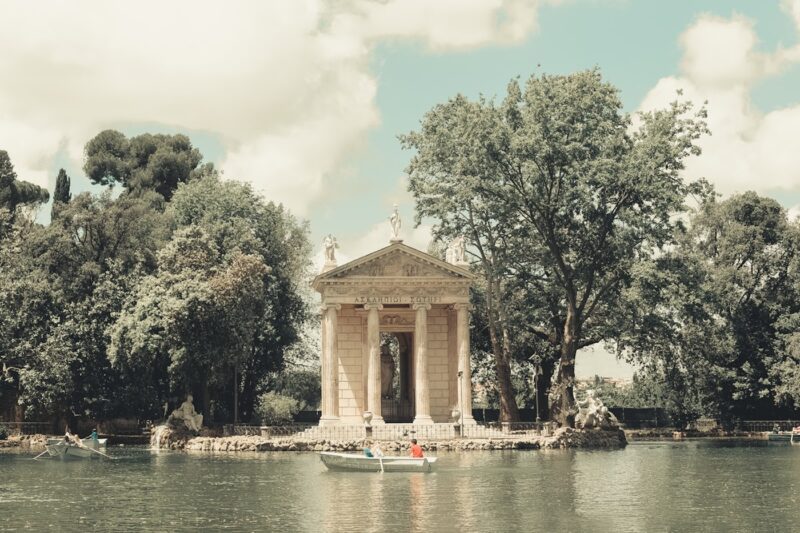
The Borghese Gardens surrounding the Villa — 80 hectares of parkland with fountains, temples, and a lake — are free and open to the public without any booking required. The gardens have been a public park since 1903. Many visitors underestimate the gardens and allocate no time to them; arriving 30 to 45 minutes before your gallery slot to walk the grounds is genuinely worthwhile.
When to Book the First or Last Slot
The 9am slot is the gallery’s opening session and typically offers the lightest internal experience — the cleanest sight lines to the sculptures before the day’s visits accumulate. The last afternoon slot is equally manageable.
The Booking Failure Mode
The most common mistake is treating Borghese Gallery tickets as a casual Rome addition that can be booked a few days before arrival. Unlike the Colosseum (walk-up tickets still exist, though inadvisable) or St. Peter’s Basilica (free and no booking needed), the Borghese Gallery has no capacity release valve.
If official tickets are genuinely sold out for your dates, third-party operators with pre-purchased blocks are the only alternative. Cancellations occasionally release slots on the official system the morning of a visit, but this is unreliable and should not be planned around.
Getting to the Borghese Gallery
The gallery sits inside Villa Borghese park, which has no direct metro access. From the historic center, the most straightforward approach is bus 52 or 53 to Pinciana/Museo Borghese, or a 20-minute walk up the Pincian Hill from Piazza del Popolo. Taxis are the most reliable option from the Vatican or Trastevere, costing approximately €12 to €18 depending on traffic.
Allow at least 30 minutes to reach the gallery from the historic center regardless of transport method. The park itself is large, and the gallery sits in its eastern section. Factor this into your day’s schedule to avoid arriving rushed for your timed slot.
Frequently Asked Questions
How far in advance should I book Borghese Gallery tickets?
For summer (June–August) visits: 8 to 10 weeks. For spring (April–May) and autumn (September–October): 3 to 6 weeks. For winter (November–March, excluding Christmas week): 1 to 3 weeks is often sufficient.
Can I visit without a reservation?
No. The Borghese Gallery does not admit walk-up visitors. Every visitor requires a pre-booked reservation.
How long is the visit?
Exactly 2 hours. The gallery enforces its timed sessions strictly.
Is the Borghese Gallery worth it compared to the Vatican Museums or Colosseum?
It is a different kind of experience rather than a competing one. The Borghese Gallery holds perhaps the finest concentration of Bernini sculptures anywhere — works that represent the apex of baroque sculpture — alongside a Caravaggio collection matched only by the Capitoline Museums.
Are the Borghese Gardens worth visiting separately?
Yes. The gardens are free, open daily, and cover 80 hectares of parkland — the largest public park in central Rome.